Why Roli Chawal Is Used in Rakhi
Planning Raksha Bandhan from abroad? Learn about why roli chawal is used in rakhi with UsaRakhi's USA delivery tips.
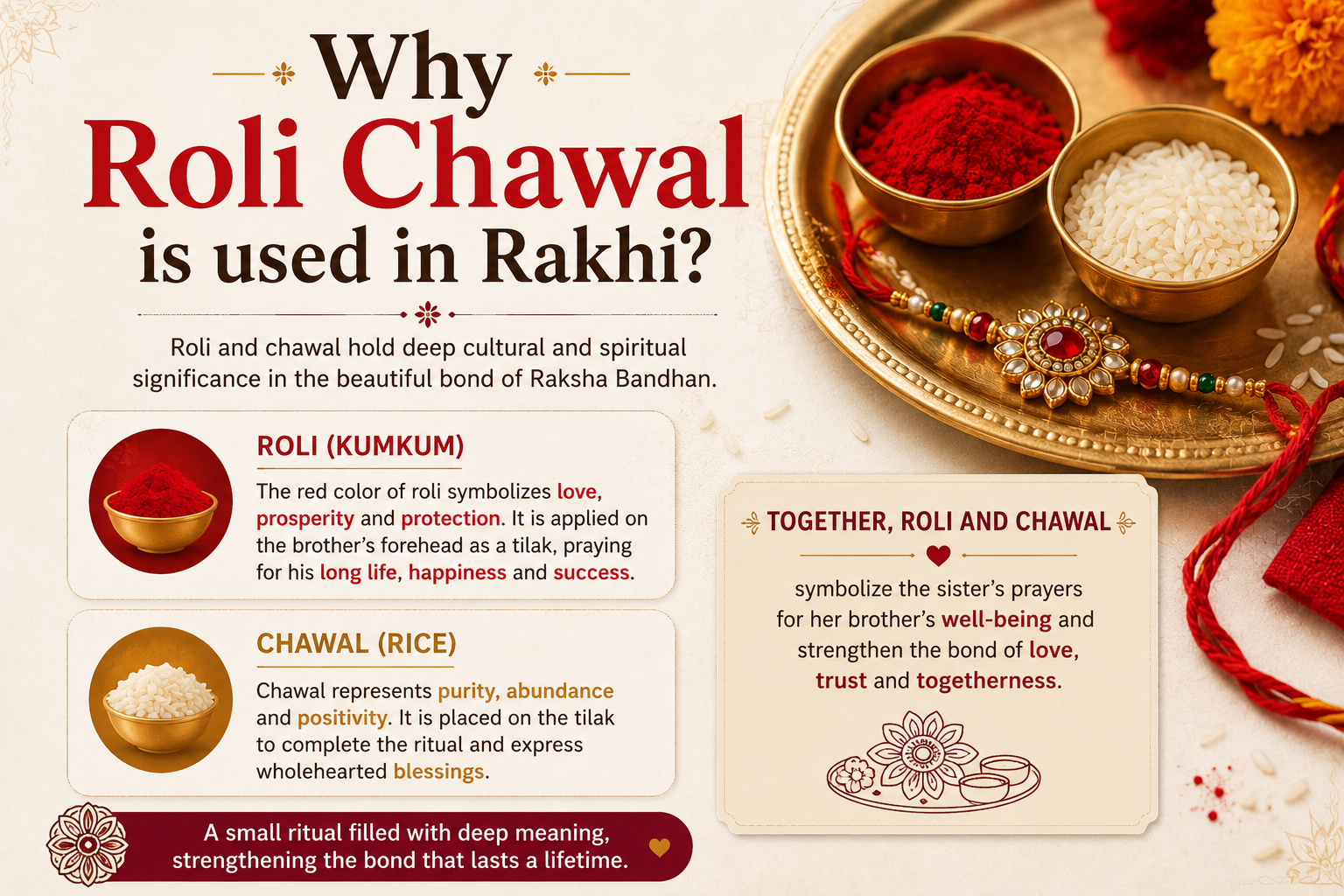
Raksha Bandhan is a festival which celebrates the special bond between brothers and sisters. The celebration is not only about tying the Rakhi but also includes a series of traditional rituals as well. Roli chawal is one of the most important parts of the Raksha Bandhan ritual. Roli, also known as kumkum, red vermilion, and chawal, meaning rice, are often used when applying a tilak on the brother’s forehead.
But why is roli and chawal used in Rakhi? This is a cultural and symbolic tradition. Knowing the importance behind it can make the Raksha Bandhan ritual feel much more special.
What Is Roli Chawal?
Roli chawal is a combination of red roli or kumkum and uncooked rice grains. On the day of Raksha Bandhan, the sister usually puts a small tilak of roli on her brother's forehead and sprinkles some grains of rice on it.
In many Hindu traditions, roli stands for auspiciousness, purity, and positive energy. However, rice is seen as representing prosperity, abundance, and nourishment. Together, they are an important part of many traditional Indian ceremonies like Raksha Bandhan.
Why Do We Use Roli for Rakhi?
Roli’s red colour plays a vital role in Indian culture. Traditionally, it is associated with strength, good luck, celebration, and positive energy. On the forehead of the brother, the roli tilak applied during the festival of Raksha Bandhan is a way of wishing good luck for his happiness, success, and well-being.
The tilak also indicates the beginning of the holy Raksha Bandhan ritual. The Rakhi symbolizes the bond between siblings, and the tilak adds a traditional blessing to the celebration.
In many Indian households, the tilak is not only for Raksha Bandhan. It is also part of festivals, religious ceremonies, marriages, and other auspicious occasions.
What Does Chawal Symbolize?
Rice is one of the most used grains in Indian rituals. It is often seen as a symbol of prosperity and well-being because it is linked to food, nourishment, and plenty.
After applying roli tilak on the brother’s forehead on the day of Raksha Bandhan, rice grains are put on the tilak. It’s a traditional way of wishing somebody a prosperous and meaningful life.
In many Indian cultures, rice is also considered a complete and sustaining food. Hence, its presence in rituals embodies a more general meaning of growth, nourishment, and abundance.
The Meaning of the Roli Chawal Tilak
The roli chawal tilak is not just a traditional step in the Rakhi ceremony. It is the heartfelt blessings and good wishes from sister to brother.
The ritual can be understood in terms of its simple symbolism:
• Roli represents auspiciousness, strength, and positive energy.
• Chawal symbolizes prosperity, abundance, and nourishment.
• Tilak represents blessings and respect.
• The Rakhi represents love, affection, and the bond between siblings.
All these things together make the Raksha Bandhan ceremony a meaningful mix of family traditions and emotions.
How Roli Chawal Is Used in Raksha Bandhan
The actual Raksha Bandhan rituals may vary from family to family and region to region, but a normal celebration is usually quite straightforward. The sister prepares a Rakhi thali with items like roli, rice, diya, sweets, and the Rakhi.
First, she may do aarti for her brother and then place a roli tilak on his forehead. A few uncooked rice grains are kept over the tilak. After this, she ties the Rakhi on his wrist and gives him sweets.
Other families have different customs, and some keep the ceremony simple. Every family observes Raksha Bandhan differently, and naturally, the traditions vary across India.
Why This Tradition Continues Today
Although many elements of festival celebrations have changed over the years, simple rituals like roli chawal continue to be popular because they are a link to families’ cultural traditions.
With gifts, video calls, and online Rakhi deliveries, siblings living in different cities or countries can also celebrate Raksha Bandhan. But even in these circumstances, when siblings come together, the traditional roli chawal ritual can be a meaningful part of the celebration.
The ritual is simple, but the emotional meaning is still important. It reminds siblings that the festival is not only about gifting but also about expressing love, blessings, gratitude, and family values.
Roli Chawal and the Spirit of Raksha Bandhan
The value of its rituals is what makes Raksha Bandhan beautiful. While tying the Rakhi is a well-known tradition, gestures like applying roli chawal help to maintain the cultural character of the festival.
Roli and rice together are an expression of the desire for happiness, prosperity, and well-being. This little ritual every year gives many families a sense of continuity and keeps treasured traditions alive through generations.
Keep roli and chawal on the thali — even when the thali is on a laptop
Roli and chawal are not decoration. The red tilak is a blessing; the rice is a wish for plenty. Together they turn tying a thread into a short, complete puja.
Most UsaRakhi rakhis include complimentary roli and chawal so a brother in the USA is not hunting for kumkum in a supermarket aisle. Send the kit with the rakhi, and the long-distance ceremony still has its traditional heart.
Shop related Rakhis
Browse single rakhi →Frequently asked questions
Why is roli applied on the brother’s forehead during Rakhi?+
Roli (kumkum) is used for an auspicious tilak — a blessing of strength, good fortune, and a formal start to the ritual before the thread is tied.
Why are rice grains placed on the tilak?+
Uncooked rice (chawal) stands for prosperity, nourishment, and abundance. Placing a few grains on the tilak is a compact wish for a full life.
Is the Rakhi ceremony incomplete without roli chawal?+
Families differ. The knot is still the core. Roli chawal is the traditional blessing layer — worth keeping if you can, not a reason to cancel the festival if you cannot.
Will a UsaRakhi order include roli and chawal for a USA ceremony?+
Most rakhis include complimentary roli and chawal so you can do the tilak on a video call without a separate puja-shopping trip.